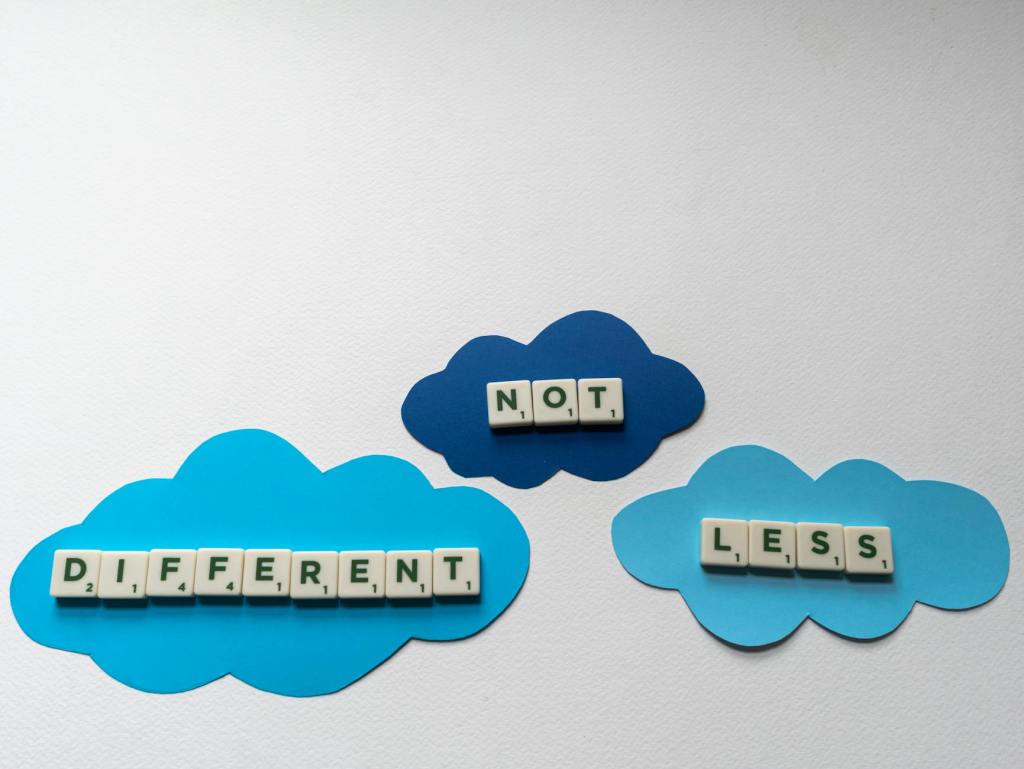
In Part 1, we explored neurodivergence through historical trauma and the CET developmental stages—how identity, survival, psychology, systems, and soul shape the lived experience of people with divergent nervous systems. In this part, we shift the focus to something deeper and more immediate:
How neurodiversity expresses itself through the nervous system, and how the CET framework of Awareness and Sensitivity helps us understand these patterns with compassion, precision, and cultural context.
Neurodiversity isn’t just an idea—it’s a biological reality.
It lives in the brain.
It lives in the body.
It lives in the autonomic nervous system.
It lives in the ways people sense, think, feel, move, respond, and connect.
And yet, for generations, society has misunderstood what these nervous systems are trying to communicate.
CET helps us decode that communication.
Neurodiversity Is Not a Problem — It’s a Pattern
The neurodiversity framework teaches a simple truth:
Brains differ. Nervous systems differ. And those differences are both natural and necessary for human survival.
In every community throughout history, you will find:
- Pattern-seekers
- Deep feelers
- Movers and stimmers
- Hyperfocusers
- Daydreamers
- Sensory-based thinkers
- Big-picture thinkers
- Detail-oriented analyzers
- Highly intuitive perceivers
These are not malfunctions.
They are variations—often strengths—shaped by evolution, environment, culture, and ancestry.
But whether a neurodiverse trait becomes a strength or a struggle depends heavily on one thing:
How the surrounding systems respond.
A neurodivergent nervous system is neither inherently disordered nor inherently superior—it is simply wired differently. CET teaches us to understand those differences through Awareness and Sensitivity.
Awareness — Understanding the Nervous System as Science
Awareness represents the cognitive, informational, and factual layers of CET.
Through Awareness, we ask:
What is this nervous system doing, and why?
Neurodiverse patterns often include:
- Faster or slower processing speeds
- Heightened sensory perception
- Difficulty filtering stimuli
- Stronger emotional reactivity
- Unique reward pathways
- Different stress thresholds
- Enhanced pattern recognition
- Nonlinear or intuitive thinking
- Difficulty switching tasks
- Rapid-fire creativity
- Complex inner worlds
- Profound focus or rapid disengagement
From an Awareness standpoint, these expressions make sense. A neurodivergent brain isn’t malfunctioning—it’s operating in alignment with its wiring, biology, and developmental history.
CET’s Awareness lens grounds us in facts:
- The autonomic nervous system (ANS) governs attention, safety, arousal, and emotional states.
- Neurodivergent individuals often have more sensitive ANS responses.
- Sensory overload is a physiological response, not a behavioral choice.
- Shutdown, hyperactivity, and dissociation are nervous-system states—not personality traits.
- Masking is a survival strategy triggered by perceived threat.
- Focus differences reflect dopamine and norepinephrine patterns, not laziness.
Awareness gives us the scientific grounding needed to stop blaming people for having different nervous systems.
But Awareness alone is not enough.
Sensitivity — Understanding the Nervous System as Experience
Sensitivity is the felt, relational, emotional, and cultural dimension of CET.
If Awareness is “What is happening?”
then Sensitivity is “What does this mean for the person living it?”
Sensitivity asks deeper, embodied questions:
- How does it feel when your nervous system processes the world differently than those around you?
- How exhausting is it to mask?
- What shame or fear arises when you’re told your natural instincts are wrong?
- How has historical trauma shaped your family’s response to your behavior?
- What does safety look like for your brain?
- What does overload feel like in your body?
- What emotions come with being misunderstood for a lifetime?
Sensitivity honors the whole human experience—not just the science.
It reminds us:
- Neurodivergent people feel overstimulated not because they’re dramatic, but because the nervous system is overwhelmed.
- They shut down not because they’re disrespectful, but because the system is protecting itself.
- They struggle with transitions not because they’re stubborn, but because neural pathways require more time to shift gears.
- They need structure not because they’re rigid, but because predictability creates safety for a nervous system that’s always scanning.
Sensitivity helps us meet neurodiverse people where they are—with attunement, presence, and humanity.
The Nervous System as a Storytelling Body
CET teaches that the nervous system is not just biological—it is narrative. It carries:
- Cultural memory
- Family patterns
- Historical trauma
- Sensory history
- Emotional experiences
- Mistrust or safety with authority
- Learned survival responses
- Resilience passed through generations
When a neurodivergent child is reprimanded for fidgeting, the nervous system records: “Movement is unsafe.”
When a teenager is shamed for masking or unmasking, the nervous system learns: “Authenticity is dangerous.”
When an adult is misunderstood at work, the nervous system concludes: “Belonging is conditional.”
The nervous system becomes the container of:
- stories we were told
- stories we were denied
- stories we inherited
- stories we learned to survive
- stories we must unlearn to heal
Neurodiversity, then, is not merely a type of brain.
It is a story of sensation, a story of safety, and a story of survival.
The CET Integration: Awareness + Sensitivity = Wisdom
When we integrate Awareness and Sensitivity, we get the full truth:
A neurodivergent nervous system is both biologically unique and shaped by relational experience.
Awareness alone leads to:
- intellectual understanding
- data without compassion
- diagnosis without context
Sensitivity alone leads to:
- empathy without grounding
- compassion without clarity
- support without strategy
But together, they produce wisdom.
CET trains us to integrate both:
- Awareness: understanding the neuroscience, biology, patterns, and developmental origins of the nervous system
- Sensitivity: understanding the impact, meaning, emotional reality, cultural context, and lived experience of those patterns
This integration allows us to see neurodivergent people not through a deficit lens, but through a human lens—one that honors their biology, their story, their culture, and their brilliance.
A Nervous System That Makes Sense
When we look at neurodivergence through Awareness and Sensitivity, everything begins to make sense:
A sensory-sensitive person isn’t overreacting—
their body is responding to more information.
An ADHD brain isn’t distractible—
it’s searching for stimulation in a low-input environment.
An autistic shutdown isn’t withdrawal—
it’s an autonomic response to overwhelm.
Masking isn’t manipulation—
it’s a survival strategy in systems that punish natural expression.
Hyperfocus isn’t avoidance—
it’s deep nervous system engagement in something meaningful.
Stimming isn’t disruptive—
it’s a regulation tool the body intuitively knows how to use.
When you understand the nervous system, judgment transforms into compassion.
When you understand history, compassion transforms into justice.
When you understand CET, justice transforms into healing.
Closing: Neurodiversity Is a Nervous System Language — We Just Have to Learn How to Listen
Neurodiversity is not a trend or diagnosis—it is an expression of humanity.
It speaks through the nervous system.
It tells us stories about the world we’ve lived in, survived in, adapted to, and resisted.
With CET’s Awareness and Sensitivity guiding the way, we can:
- interpret neurodiversity without shame
- respond without fear
- support without control
- honor without pathologizing
- listen without assuming
- see the nervous system as wise, not broken
Part 2 closes with one central truth:
Neurodiversity is the body’s honest conversation with the world. When we learn to listen through Awareness and Sensitivity, we don’t just understand neurodivergent people—we understand humanity itself.
 SirAaronMason.com
Leave a comment