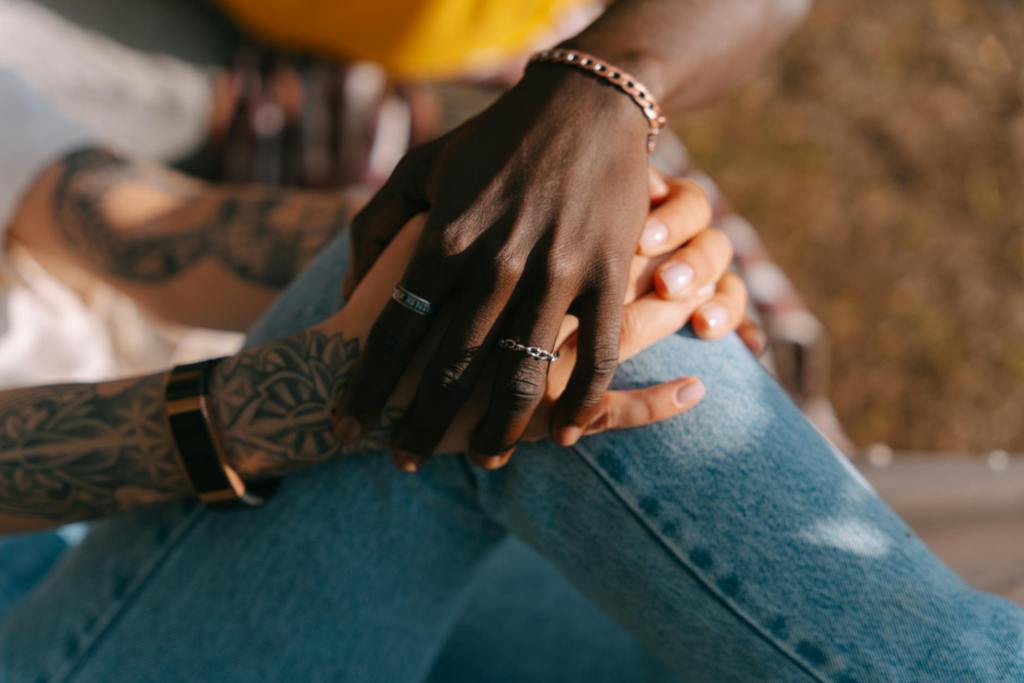
In the world of therapy, there are moments when we’re called to confront uncomfortable truths—both within ourselves and within the dynamics of the relationships we help navigate. Today, I invite you to join me on a journey into the heart of one such truth—a journey that explores the delicate balance of privilege and pain within biracial couples.
It’s a topic that’s been weighing heavily on my mind lately, as I reflect on my work with couples where one partner identifies as white and the other as black. As one of the few black marriage and family therapists in Eugene, Oregon, I’ve found myself uniquely positioned to offer support to individuals seeking therapy with someone who shares their racial identity.
Yet, amidst the intimate conversations and shared experiences, I’ve noticed a recurring challenge—a struggle that often surfaces within the white partners of these couples. It’s a struggle to validate their own experiences of feeling marginalized or voiceless within their relationships, fueled by an acute awareness of their own privilege.
Picture this: a white partner hesitating to express their frustrations, their pain, their sense of invisibility, all because they feel that their privilege somehow invalidates their struggles. It’s a conundrum that creates a barrier to genuine connection—a barrier that I’ve witnessed time and time again in my therapy sessions.
But here’s the thing—acknowledging privilege doesn’t diminish the validity of one’s own pain. It’s not an either/or scenario; it’s a both/and situation. And as therapists, it’s our role to guide couples in navigating these complexities, to create a space where both partners feel seen, heard, and understood.
In my work with these couples, I’ve leaned on the principles of the cultural effectiveness model—a framework that emphasizes the importance of validating diverse experiences and fostering genuine empathy. It’s about helping partners recognize that their individual struggles, rooted in privilege or oppression, are equally valid and deserving of acknowledgment.
Through this process, I’ve witnessed profound transformations—moments where partners embrace their own vulnerabilities, where they find common ground in their shared experiences of pain and resilience. It’s a journey of self-discovery and mutual understanding—a journey that transcends racial divides and fosters deeper, more authentic connections.
So, where do we go from here? How do we continue to navigate the complexities of privilege and pain in our therapeutic work? The answer, I believe, lies in creating spaces where individuals feel empowered to embrace their whole selves—to acknowledge their privilege without minimizing their pain, and to recognize their struggles without diminishing their strengths.
It’s about fostering a culture of compassion and empathy, where all experiences are valued and all voices are heard. And as we embark on this journey together, I’m reminded of the power of therapy to facilitate healing, growth, and profound transformation—not just within individuals, but within the relationships that bind us all together.
So let’s continue to lean into these uncomfortable conversations, to challenge the status quo, and to create a world where privilege and pain are acknowledged, understood, and ultimately, transcended. Together, we can build a future where empathy reigns supreme and genuine connection knows no bounds.
 SirAaronMason.com
Leave a comment